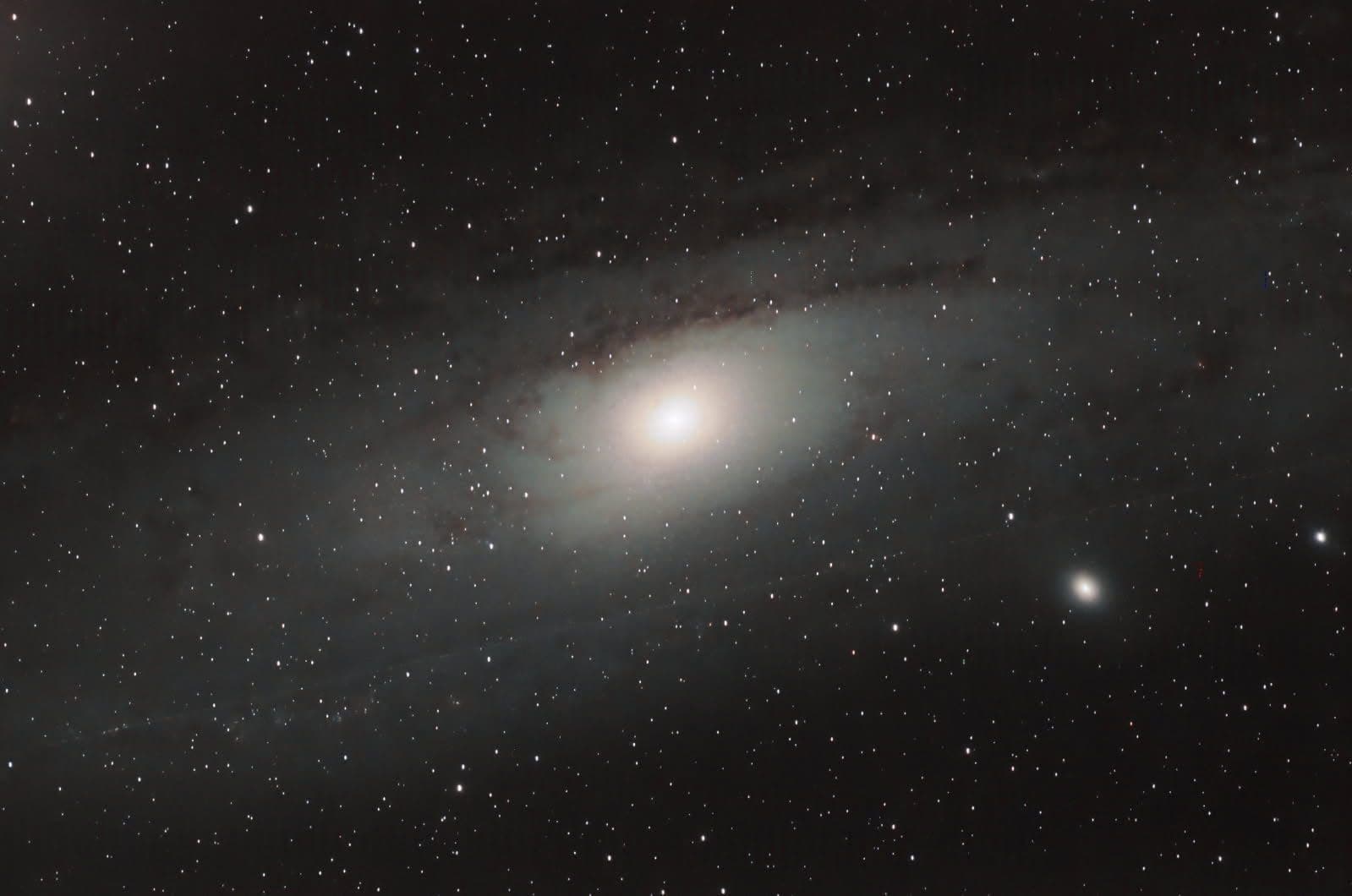
As Autumn approaches, the trees start to change colors, and the weather starts to cool off; one of the most interesting celestial objects rises high in the sky and becomes easy to see in dark-sky areas. This object is the Andromeda Galaxy.
Obviously, there are billions of galaxies in the observable universe, so what makes this one so special? To start, it is the ONLY thing visible to the naked eye that is outside of the galaxy we live in. If you go outside and look up, every other object and star you’re seeing exists inside our galaxy, the Milky Way. This also makes it the farthest visible object to the naked human eye!
The Andromeda Galaxy is 2.5 million light-years away from Earth, which means the light we see when we look at it is 2.5 million years old!! The light has been traveling for so long that when it left the Andromeda Galaxy, we still had the oldest kind of Smilodons (or saber-tooth tigers) on Earth! It is the closest major galaxy to the Milky Way, and it is actually on a collision course with us as well. We are expected to collide with the Andromeda Galaxy in about 4.5 billion years; stars in each galaxy are quite far apart, making any real collisions unlikely, and our solar system will most likely stay intact.
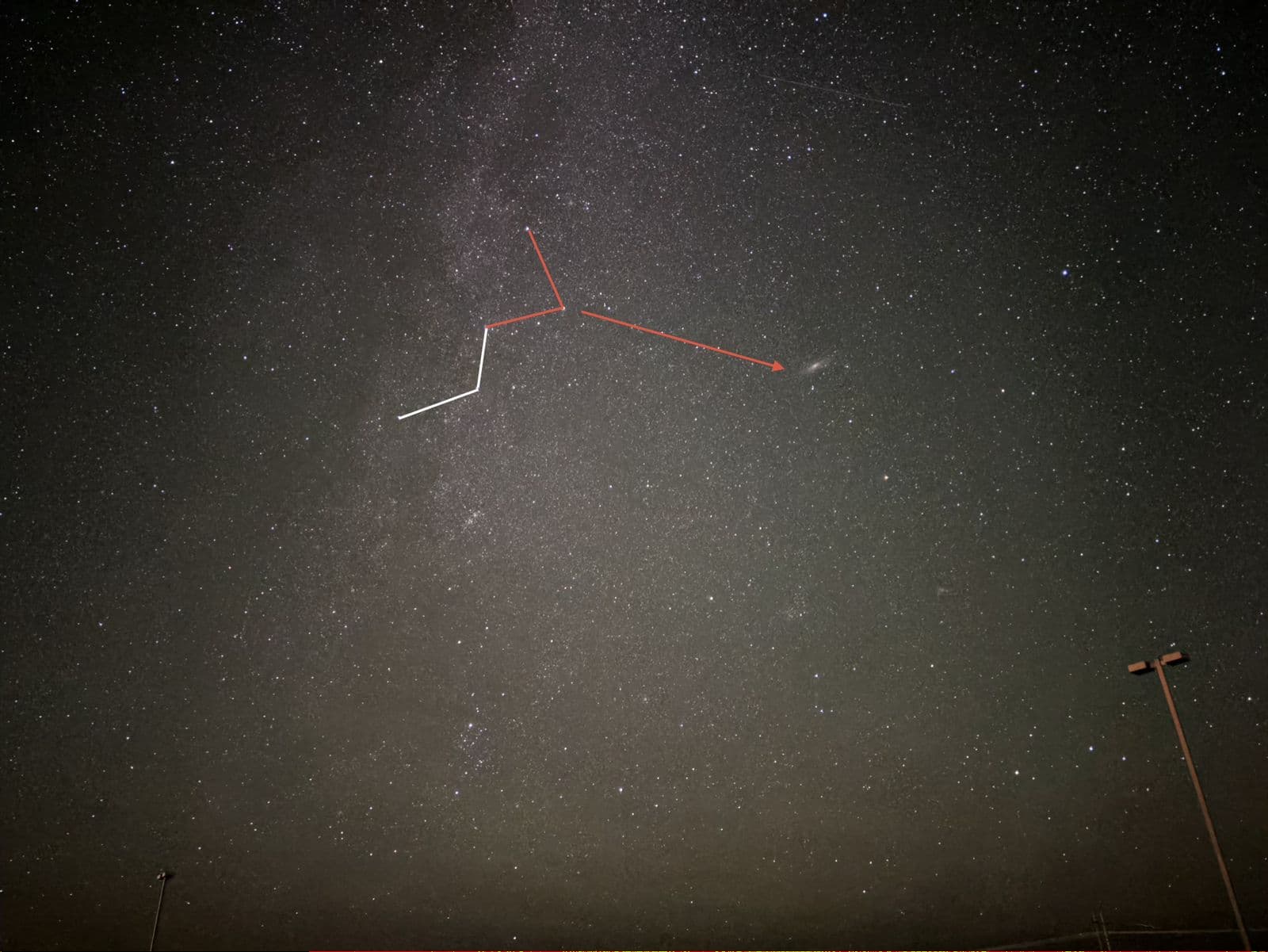
So how do you see the Andromeda Galaxy?! Make sure you’re in the Northern Hemisphere and start by finding somewhere dark to stargaze! Darkness is measured by something called the Bortle scale. If you’re not sure where you’re at on the Bortle scale, light pollution maps are easy to find online. You need to be at or below a Bortle 4 to see the Andromeda galaxy. Once you have found a dark enough area, look for a giant W or M in the Northern sky. It could be sideways, but it is made up of very bright stars. The star at the lowest point of the W or the highest point of the M will point you straight to the Andromeda Galaxy. Look for the arrow shape formed by that point of the W or the M and follow it about 3 lengths; you will see what looks like a small cloud; that is the Andromeda Galaxy!