Night Sky Conditions
Weather & stargazing conditions
Tonight's live forecast above Bryce Canyon, the current moon, and how we read the sky before every tour.
Tonight above Bryce Canyon
Updated Oct 17, 6:36 AM MDT · Open-MeteoSky Tonight
Partly Cloudy
Tonight over Bryce Canyon
Partly Cloudy with 43% cloud cover. Low near 37°F, winds 2 mph. 6% chance of precipitation. Humidity around 50%.
Moon Tonight
The moon adds some light, but the Milky Way is still visible on clear nights, especially once the moon has set.
Cloud cover · hour by hour
Tonight, after 8 PM · Mountain TimeHourly cloud cover from Open-Meteo — shorter bars mean clearer skies. We run tours whenever the sky opens up, even between passing clouds.
The nights ahead
Conditions sourced from Open-Meteo — high-resolution hourly forecast for Bryce Canyon City, shown exactly as reported so you can read the night for yourself. The final go/no-go for each tour is made about 30 minutes before start time, giving the sky every chance to clear.
Planning a future trip?
See the stargazing calendar — moon phases, darkest-skies windows, and meteor shower peaks for the months ahead.
Clouds Permitting
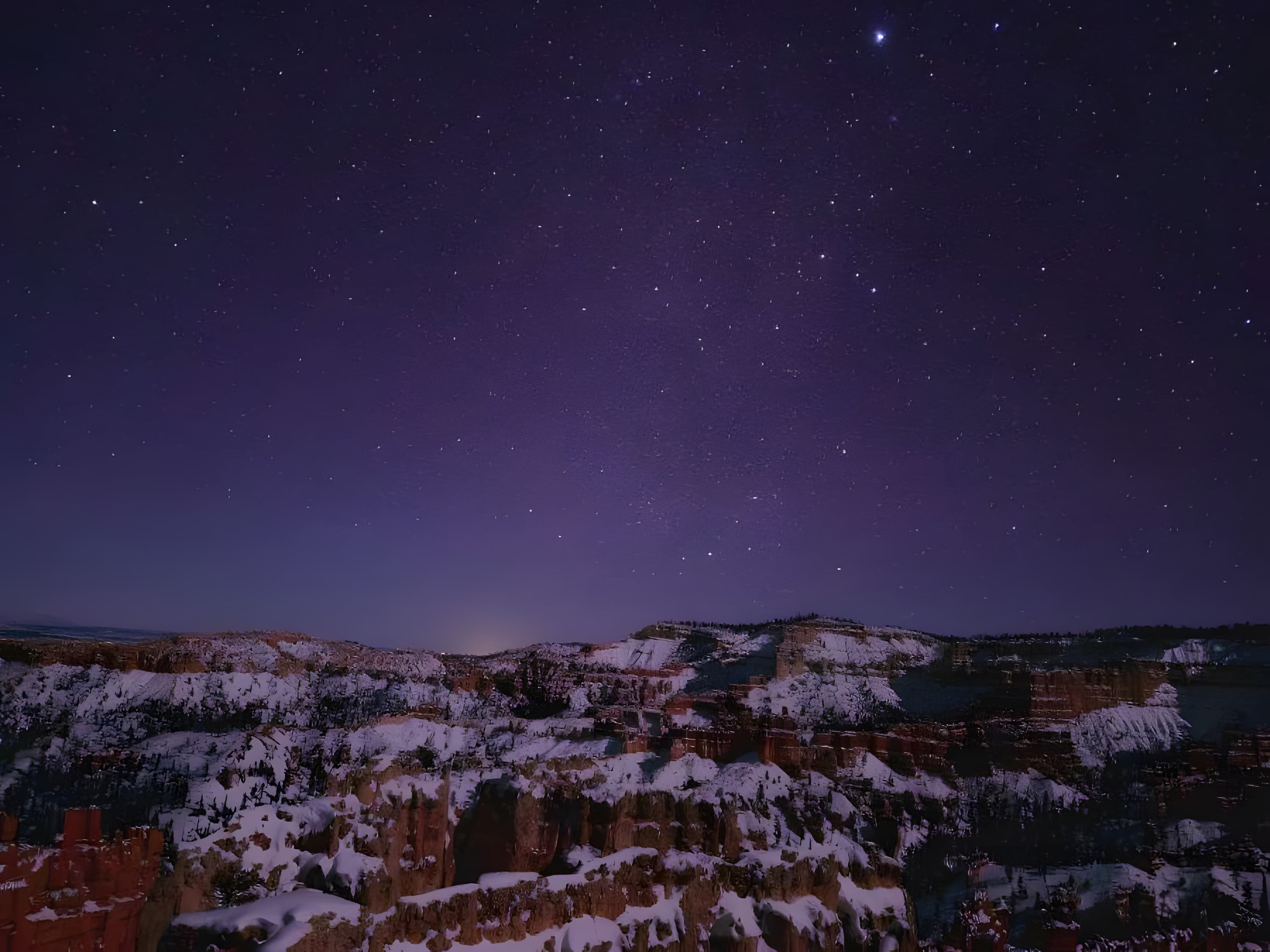
We're out whenever the sky gives us a window.
Southern Utah's high desert holds some of the clearest, driest air in the country. When the forecast cooperates, we run every night of the year, from spring snowmelt to the deep cold of winter.
Reading the Sky
What makes a great stargazing night
Four things decide how good a night will be. When they line up over an already-dark sky, Bryce delivers views most people never get to see in their lives.
A clear sky
Cloud cover is the single biggest factor. A clear or mostly clear night reveals thousands of stars; heavy overcast hides them. We track the hourly forecast and run tours whenever the sky is workable, even through broken clouds.
Dry desert air
Bryce Canyon's high-desert air is exceptionally dry, and dry air is transparent air. Less moisture means sharper, steadier stars and cleaner telescope views than you'll ever get in a humid climate.
Real elevation
At over 8,000 feet you sit above a good share of the atmosphere and far from any city glow. It's a big reason Bryce is a certified International Dark Sky Park with some of the darkest skies in North America.
Season by Season
Weather through the year
Bryce Canyon keeps dark, clear skies in every season. What changes is the temperature, the tour time, and what's overhead as the year turns.
Spring
Mar – May
Nights 20–40°F
Mild, stable air and thinning crowds. By late spring the Milky Way core begins rising before dawn. Tours start around 9:00 PM.
Summer
Jun – Aug
Nights 40–50°F
The warmest nights, with the Milky Way core high overhead. Afternoon monsoon storms in July and August usually clear by tour time. Tours start 9:30 PM.
Fall
Sep – Oct
Nights 25–45°F
Arguably the best all-around season: crisp, clear, stable skies and comfortable starts around 9:00 PM before the deep cold arrives.
Winter
Nov – Feb
Nights 0–25°F
The coldest but often the clearest, most transparent skies of the year, with the fewest people. Bundle up hard. Tours start early, around 7:30 PM.
One constant in every season: dress warmer than you think you need to. Standing still under the night sky at 8,000+ feet gets cold fast. We bring blankets and hot drinks; you bring the layers. See what each tour includes →
Book With Zero Weather Risk
We carry the weather risk, not you
Weather is the one variable we can't schedule around, so we make it simple. We check the forecast and make the final call about 30 minutes before your tour starts — giving the sky every chance to clear — then message you right away. If clouds fully close out the sky and we have to cancel, you choose: a 100% refund or a free reschedule. You're never charged for a night the stars don't show.
Full refund
100% back if we cancel for weather, or reschedule for free.
We watch it for you
We track the forecast and make the call about 30 minutes before start time.
Run when workable
Partial clouds still leave plenty to see. We go whenever the sky allows.
Weather Questions
Frequently asked
What is the weather like at Bryce Canyon at night?+
Nights at Bryce Canyon are cold year-round because the park sits above 8,000 feet. Summer nights typically drop into the 40s°F even after 80°F days, and winter nights routinely fall below freezing, often into the teens or single digits. The air is dry and thin, which makes for exceptional star visibility but demands warm layers on every tour.
What weather is best for stargazing at Bryce Canyon?+
The best stargazing nights are clear, dry, and moonless. Clear skies with little or no cloud cover let you see thousands of stars and the Milky Way; low humidity keeps the air transparent; and a new moon (or a night after the moon has set) means the sky is dark enough for faint galaxies and nebulae. Bryce Canyon's high desert delivers all three more often than almost anywhere in the country.
Do stargazing tours run if it's cloudy?+
We monitor the forecast closely and run tours whenever the sky is workable — even partial clouds often leave plenty to see. If clouds fully block the sky and we have to cancel, you receive a full refund or can reschedule for another night, no questions asked. You're never charged for a night the stars don't show up.
What happens to my booking if the weather is bad?+
If we cancel a tour due to weather, you get a 100% refund or free reschedule — your choice. We make the go/no-go call and notify you about 30 minutes before your tour starts, giving the sky every chance to clear. Booking with us carries zero weather risk.
How cold does it get, and what should I wear?+
Dress far warmer than you think you need to. Even in summer, standing still under a clear night sky at 8,000+ feet gets cold fast — bring a warm jacket, hat, and closed-toe shoes. In winter, wear heavy insulated layers, gloves, and a hat. We provide blankets and hot drinks, but warm clothing is what keeps you comfortable enough to enjoy the whole tour.
What is the best time of year for stargazing at Bryce Canyon?+
Bryce Canyon has dark, clear skies year-round, but each season offers something different. Spring and fall bring mild temperatures and stable air. Summer offers the warmest nights and the Milky Way core high overhead, though afternoon monsoon storms can roll through July–August. Winter has the coldest but often the clearest, most transparent skies — and the fewest crowds.
Limited spots each night
Clear skies ahead? Reserve your night.
Spaces are limited each evening. Book ahead to hold your place under the darkest skies in North America, and rest easy knowing the weather is on us.