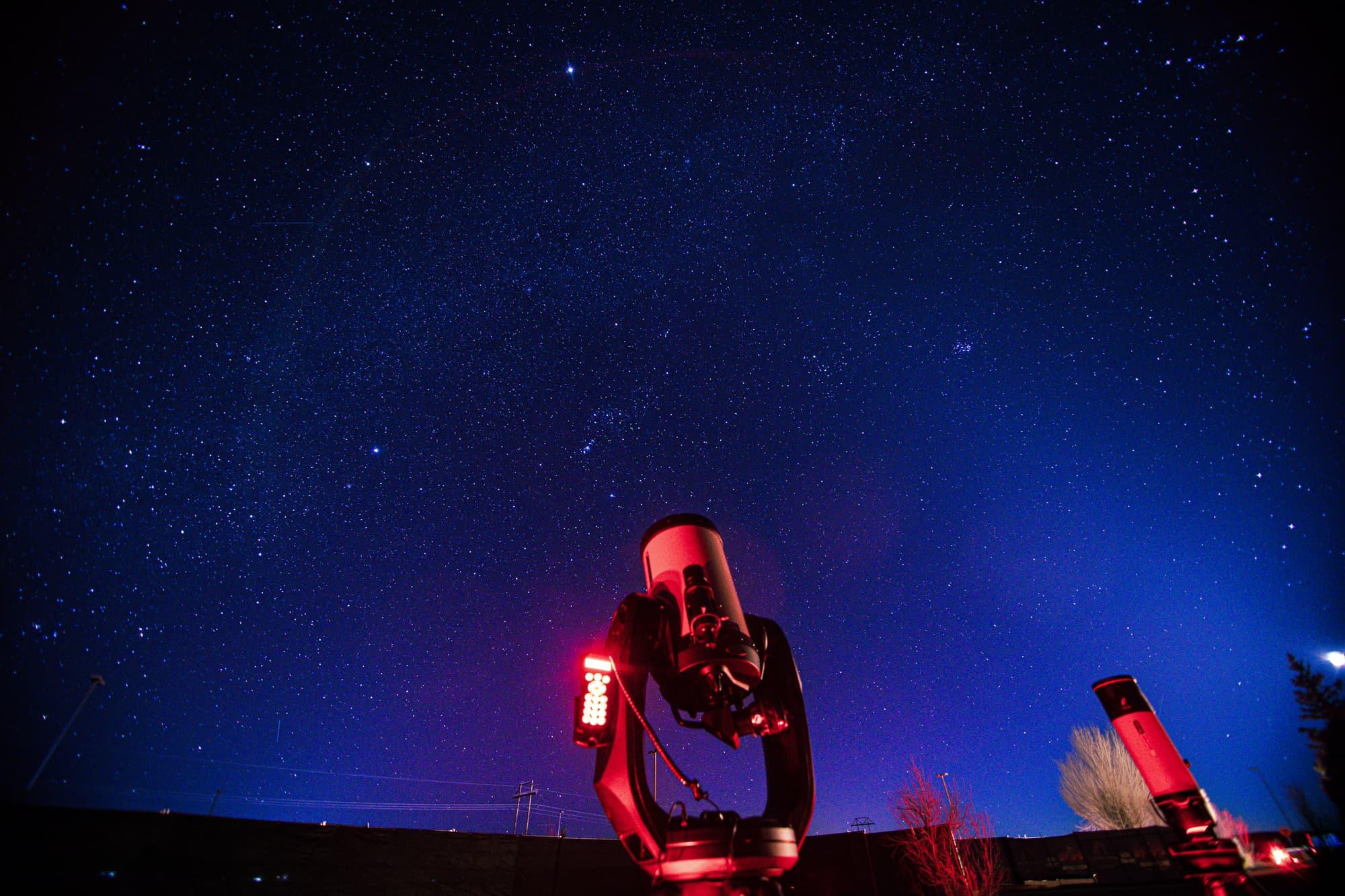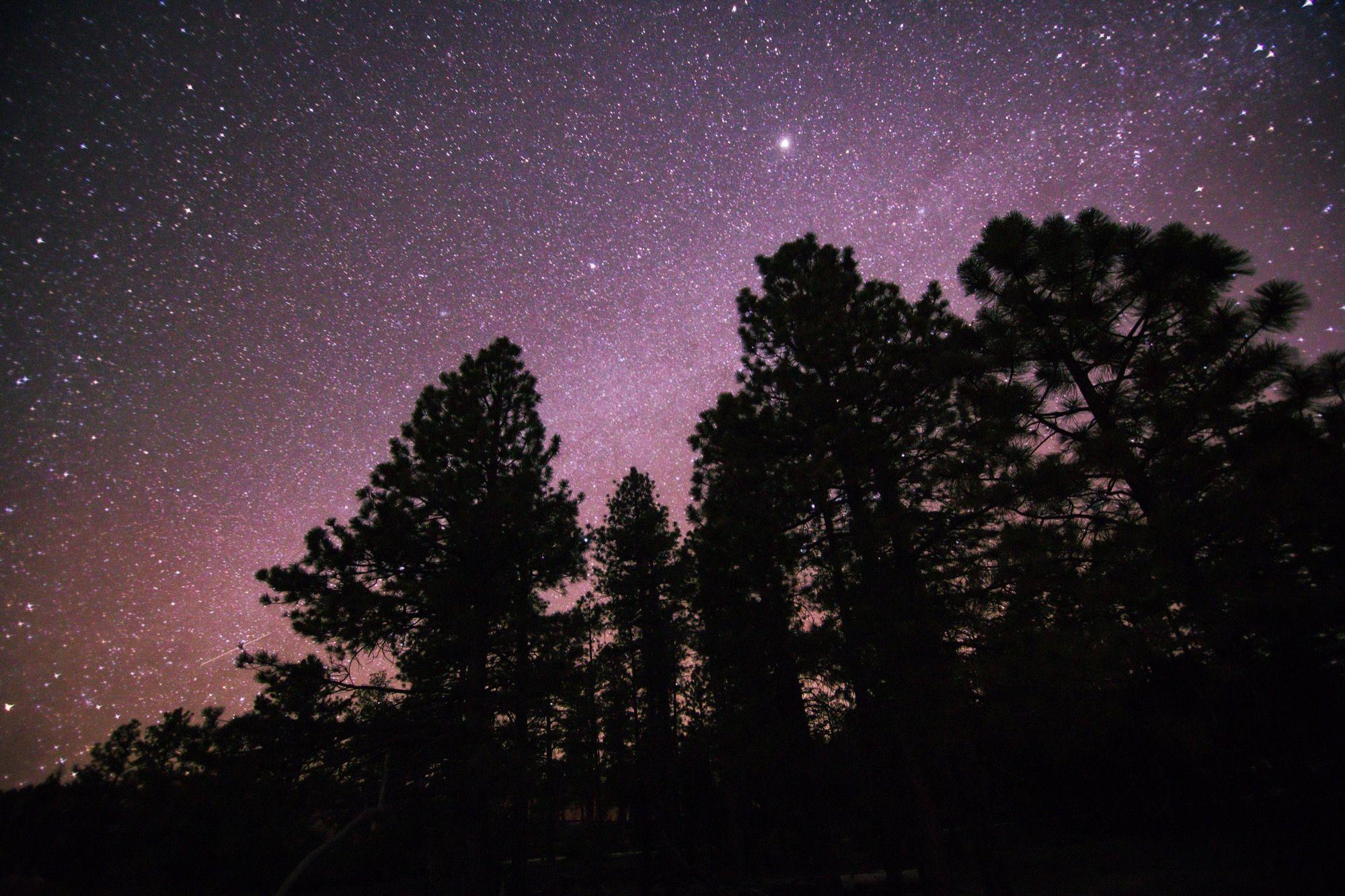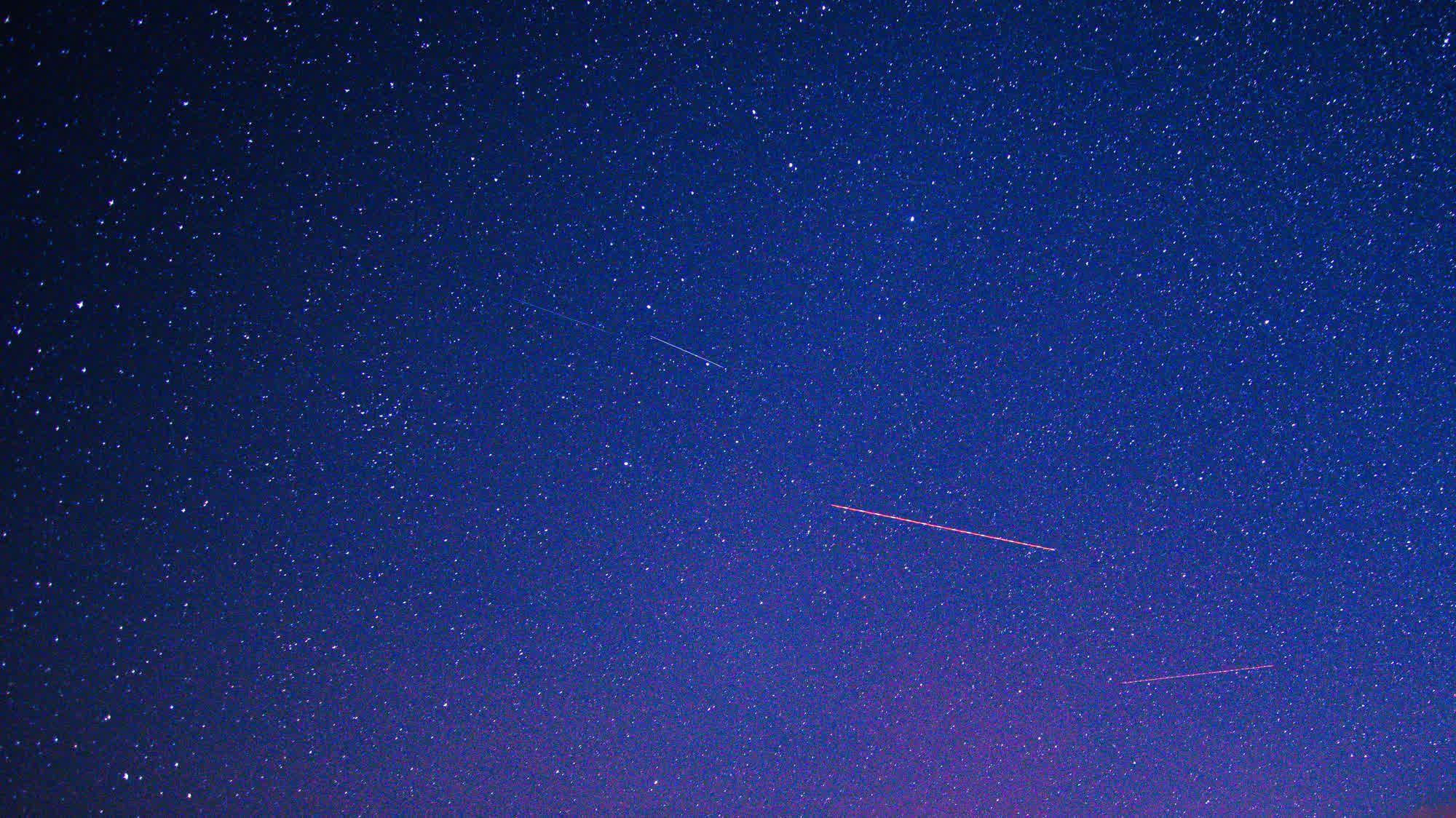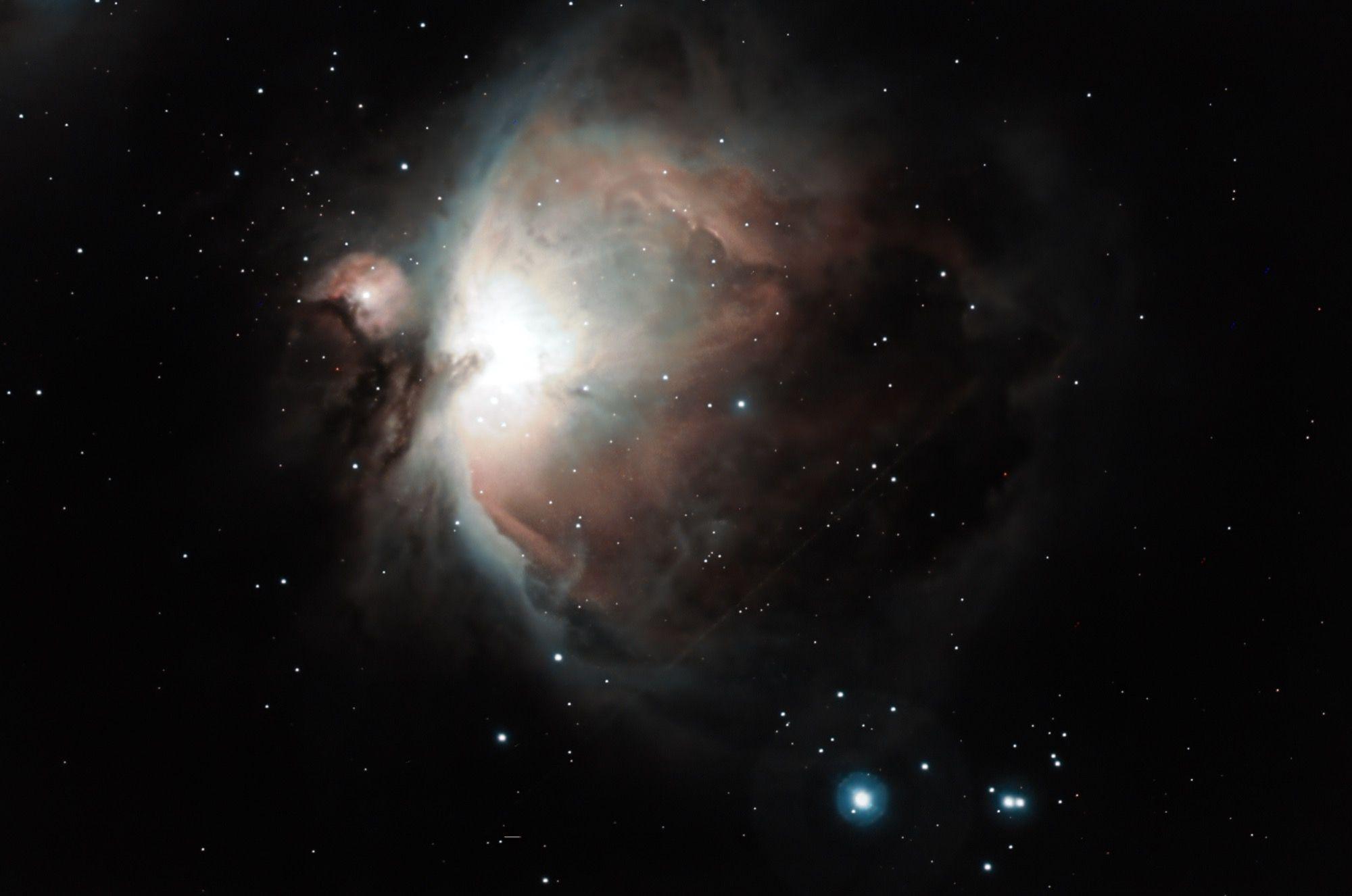
Taking our telescopes out this time of year is very exciting. As we slew our scopes onto the Orion nebula we see clouds of reflective gas and dust. Molecular clouds that absorb all light are splashed in the middle and some that make the shape of a horse near Orion’s Belt. As you stand in awe at its beauty you may not notice a bright light rise on the horizon. But the second you look up, an orange dot rises with a red one. Jupiter and Mars. If you wait a few weeks they begin to rise with the moon, and meteor showers start sprinkling through the sky like rain drops. The winter brings lots of deep space objects and planets for us to observe. But it also brings weather and cold that even I can’t bear without preparing. But fear not, this blog is here to help anyone curious about what winter stargazing looks like.
Utah is known for its deep red rocks and bending arch formations after years of erosion. But come November the whole state gathers their winter gear and puts on their winter tires. As the snow begins to fall, ski resorts begin to open and thousands of people come here just for the snow and mountains. But what many people don’t realize is that the southern half of Utah can get just as cold as the top of the mountains. The Utah desert can get down to -2 degrees Fahrenheit (or -19 degrees Celsius). BRRR that is cold! So having the right gear is important. But we always say, if you don’t like the weather in Utah, wait five minutes. The weather can get pretty hectic. Because Utah is largely arid and ringed by mountain ranges, winter cold usually feels drier than humid northern winters, and sunny mornings can shift into storms or sharp temperature drops by afternoon. This can feel like whiplash if not prepared.
So what can you do to feel unstoppable against these drastic conditions? I suggest bringing lots of layers. Having thermal shirts or pants can be really helpful trapping your body heat. Having sweats and jeans on top allows you to stay warm and hold off any wind. Having hand and foot warmers is great to keep your toes and fingers warm. Heat also releases on our feet and our heads so having foot warmers can keep your body temperature stable. If you have ever backpacked in the winter you may have used rain gear to stay warm. Rain gear traps heat like an atmosphere and can keep you dry as well. So layering a rain coat on top of jackets and sweaters is a great way to stay warm. Gloves, beanies, and scarfs are always in my car for the ready. I always suggest having more layers than you feel comfortable with. It’s a lot easier to take off a layer if you get too hot.
Most people rent RVs and large vehicles to get around. I suggest making sure the tires have a good tread and checking for chains if possible. The roads can get slick and snowy, and in the night it can be easy to slip heading down the mountain. So having good tires and making sure you have the tools to get through the snow is important this time of year.
The winter can be relentless. But with it come beautiful planets like Jupiter, and stunning deep space objects like the Orion nebula. The winter sky brings loads of constellations that you can not see in the summer, and the atmosphere gets thinner, allowing the stars to crisp up and shimmer in HD. It is a great time to get out and look at the stars. As some of them (like Betelgeuse) may not be around for much longer. From the stories we have told for thousands of years, to the moments we can make with our friends can only happen if we get out, and look up. And knowing what to expect with the weather can help you see the most beautiful astronomical events in our sky.