As most of us know, artificial intelligence has been a rapidly expanding era of technology in the past 4 years. There are widespread debates about artificial intelligence and its effects on the natural world. The most common negative effect that is debated has to do with AI data centers and their water and power intake, however there is a third and quieter issue unfolding. How does the increase in AI centered technology affect our skies?
AI data centers are used to train AI programs, respond in real time to AI requests (such as ChatGPT), process data sets, store information and provide specialized cooling and power systems. These centers take an enormous amount of power and water to run and they also have a disastrous effect on the visibility of the night sky, especially when placed in rural areas. According to the Pew Research Center, 67% of all planned data centers are set to be constructed in rural areas. Terrestrial AI data centers emit a massive amount of industrial skyglow. Skyglow is an increase in apparent brightness of the night sky, and it can be caused by numerous artificial factors. AI data centers cause skyglow through continuous 24/7 industrial, security lighting. Skyglow is also amplified by air pollution. AI data centers emit a high amount of air pollution that not only impose health risks for surrounding populations, but also amplify skyglow concerns. MIT News states that, “60% of the increased electricity demands from data centers will be met by burning fossil fuels, with a Goldman Sachs report estimating increased global carbon emissions of about 220 million tons”. DarkSky International, an organization created to restore the nighttime environment and protect communities from light pollution, calls for stricter lighting policies surrounding data centers. To reduce industrial skyglow, data centers can avoid overillumination, implement an 80-degree cut off angle, use smart lighting controls and prioritize warmer color temperatures. In regards to the increase in construction of data centers, DarkSky International released this statement, “We oppose facilities proposed in naturally dark locations, specifically those that threaten the integrity of International Dark Sky Places (IDSP). These “dark islands” are rare, and once lost to industrial skyglow, they are nearly impossible to recover”.
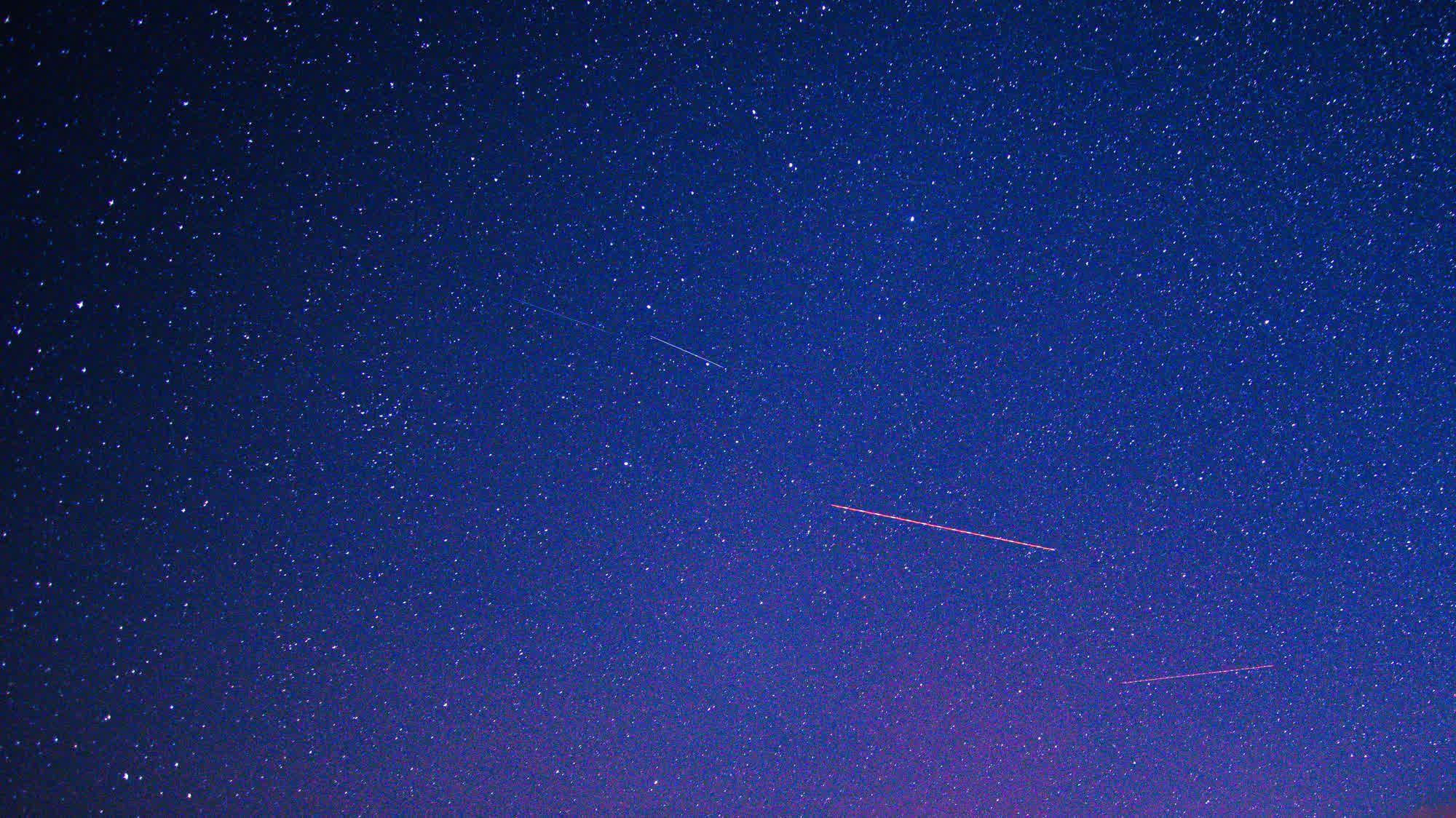
An estimated 3,345 artificial satellites were launched into orbit in 2026 alone, 2,222 of those being Starlink satellites. There are now over 16,000 satellites orbiting our planet. Roughly 96% of the total artificial satellites are LEO satellites. LEO stands for “low-earth orbit” satellites. The Federal Communications Commission (FCC), who manages satellite regulations, has put a 5-year deadline on LEOs once their missions end. When these LEO satellites reach the 5-year deadline they fall into Earth’s atmosphere and incinerate, releasing aluminum particles into our atmosphere. With the exponential increase in satellites over the last 5 years, there are imminent negative effects to our night skies. In a 2021 research article published by Monthly Notices of the Royal Astronomical Society Letters, scientists found that objects orbiting Earth have exceeded natural light levels by 10%, a threshold for light pollution set by the International Astronomical Union in 1979. Satellites, especially “mega-constellations” cause increased skyglow, air pollution, and issues for astrophotographers. Elon Musk’s company, SpaceX (owner of Starlink) owns ~67% of all satellites. This year SpaceX filed an application to the FCC to launch 1 million new satellites into our atmosphere to act as orbital AI data centers.
In order to keep skies dark there must be regulations to help reduce light pollution emitted from these kinds of new technology. Not only do these issues affect astronomers, astrophotographers and the astrotourism industry, but they also disrupt nocturnal wildlife and human circadian rhythms. Lastly, a quote from DarkSky International, “Therein lies a profound, tragic irony: we have polluted our planet’s boundary layer so heavily with ground-based light that we can no longer even see the cosmic-scale footprint we are carving above it. For the vast majority of humanity, the megaconstellations rewriting the rules of our orbital ecosystem are completely invisible, masked by the ambient glow of our own cities. We are fundamentally blind to a revolution happening right above our heads”.